lunedì 26 novembre 2012

Milan: Discover Gallerie d'Italia Museum, Piazza Scala

Milan, Vittorio Emanuele II Gallery (Italy)

Hello, my friends! Welcome in My Own Italy!
Today I suggest you a different itinery in Milan, away from the most famous tourist destinations; you know that I love to let you discover Italy with My Personal Touch!

In the very center of the city, Piazza  Scala, you can visit a new museum: Gallerie d'Italia .

Symbols of the history of Milan, the buildings that together form the architectural complex that houses the Galleries were designed by leading Italian architects between the end of the eighteenth and the beginning of the twentieth century.

The Galleries, Milan (Italy)


The exhibition Twentieth Century Worksite presents Italian art of the second half of the 20th century, in a selection of approximately 200 art works from the Intesa Sanpaolo collections.

Organised into 12 sections, they are enriched by the inclusion of sculptures, by a themed study dedicated to Colour as a plastic form.


If you want, you can enjoy a short presentation of the Galleries in this video:


This is me inside the Galleries
The art works of the twentieth century are organized in 12 sections and 2 single-subject itineraries. The leading artistic movements of the period –  Informal ArtSpatialism Nuclear ArtConcrete Art Movement , Kinetic and Programmed Art, Arte Povera, Conceptual Art  and Italian Pop Art  – are retraced through the most important artists.
The Galleries (Milan, Piazza Scala)


For me it was a really exiting experience: not only for the incredible richness of the works in the exhibition, but also because you can play with multimedia screens and customize your itinerary and deepen the arguments that you prefer.


The Galleries, Milan (Italy)


I hope that while you are visiting Milan, you can have enough time to visit this art Gallery.
Milan in the capital not only of fashion, but also of Italian art and design!!


Ciao, 
Carlotta

martedì 20 novembre 2012

Lombardy: Cremona and the ancient tradition of Nougat

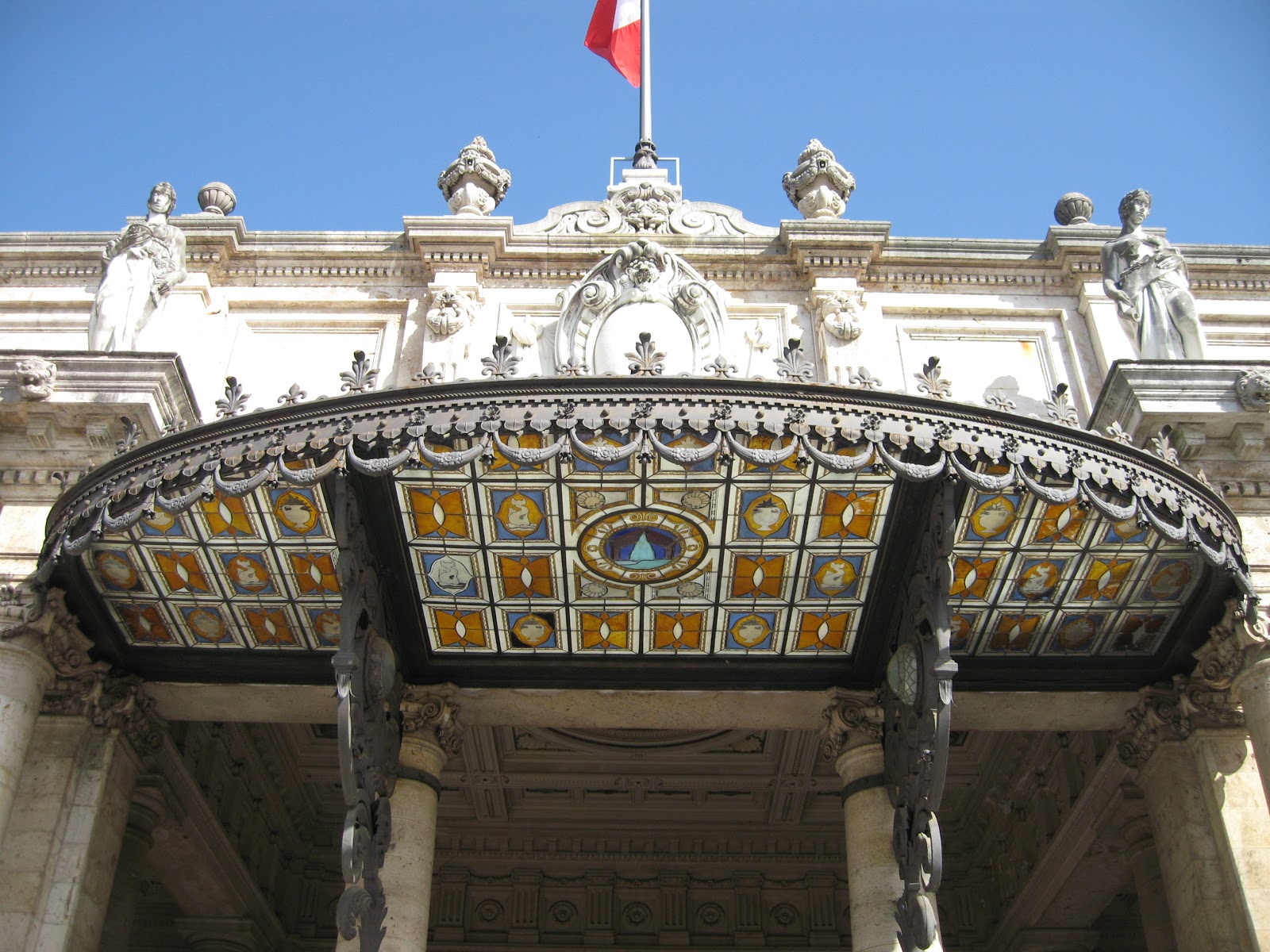
Cremona, Palazzo Comunale (Town Hall), Italy
Hello, my friends, welcome in My Own Italy!
Here in Italy we are in the pre-Christmas period, and in my blog  I'd like to introduce you to one of the most famous italian product: the Nougat (in italian: Torrone) and also the city that is its homeland.

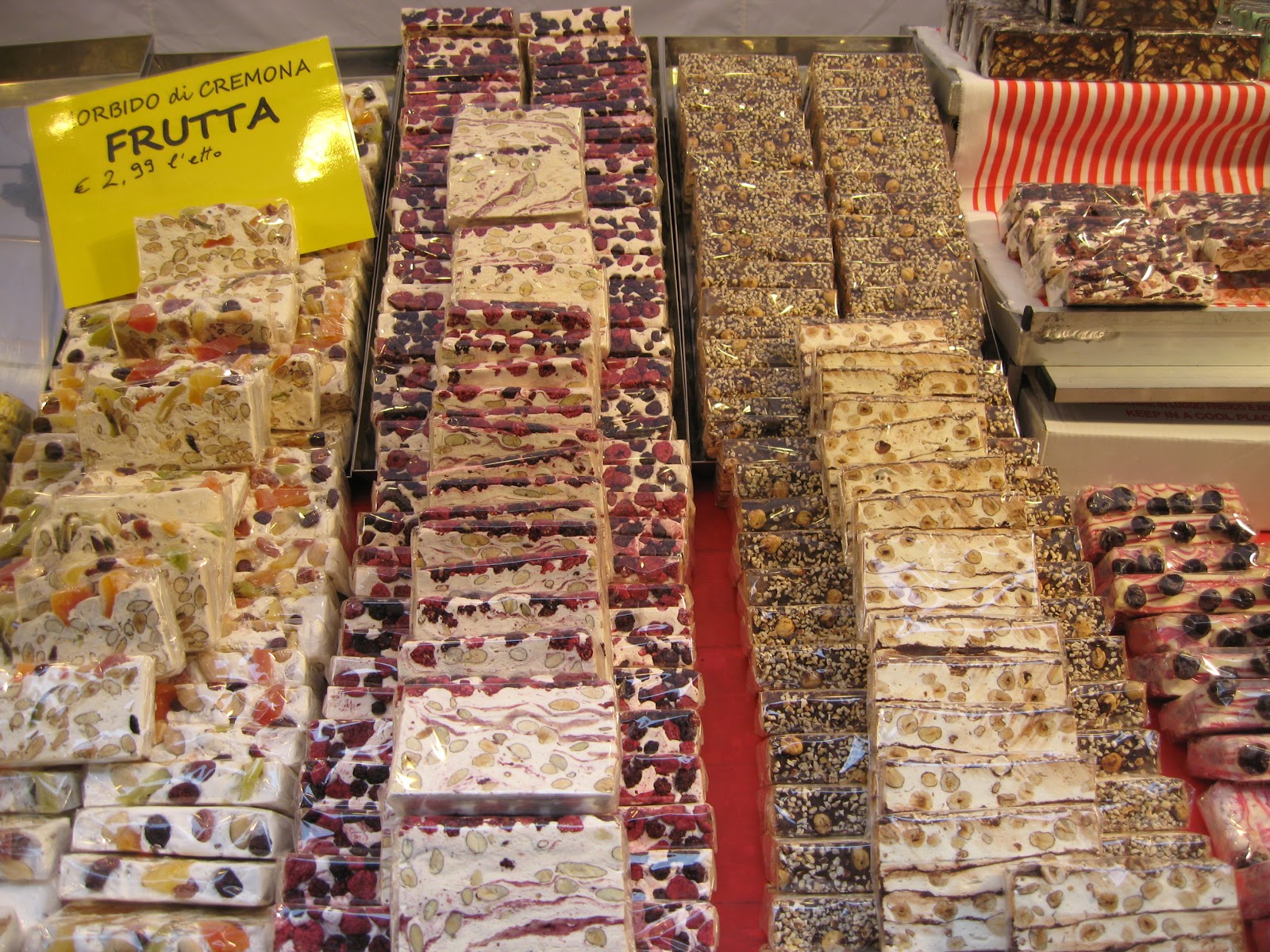
Nougat in Cremona (Italy)
Today I suggest you to visit  Cremona, a little hystorical town in Lombardy. It is one hour from Milan, and even it isn't so famous, it can offer you to discover an interestiong architecture of the Middle Ages.

Cremona was conquered by the Romans in 218 BC who made it a military stronghold and an important settlement.

Cremona (Italy)
Focus of Cremona is historic Piazza del Comune, where you overlook the main monuments of the city: The Torrazzo, the Baptistery, the Loggia of the Soldiers and the Town Hall!


Looking at the Torrazzo (Cremona)
The Il Torrazzo is an imposing tower built between the thirteenth and fourteenth century, it is certainly the most famous monument of Cremona.


Il Torrazzo is the highest historical bell tower in Italy!

On the fourth floor, you can admire one of the largest astronomical clocks in the world.

Built around the end of the '500 the clock represents the sky with the zodiacal constellations through which the motion of the Sun and the Moon.

The clock in the Tower Torrazzo (Cremona)

By the way, once a year, at this time, in Cremona takes place the Festival of Nougat!

Nougat is the typical cake of Cremona: it's a mixture of egg white, honey and sugar, stuffed with almonds, walnuts, peanuts, hazelnuts, often covered with two wafers.

This is Carlotta @ Festival of Nougat (Cremona)

The Festival of Nougat  is an appointment for the gourmands.

The streets and squares of Cremona are animated by events, shows and tastings.


Festival of Nougat (Cremona, Italy)

I invite you to join tourism and gastronomic tradition: taste the nougat also means living the
Cremonese tradition.


Nougats (Cremona, Italy)

The theme of the 2012 was the sweetness; more than 60 initiatives between games, entertainment moments, cultural events, food and wine designed to celebrate the combination of nougat-sweetness in a magical atmosphere rich in history and traditions!

Carlotta and Nougat! (Cremona)

In fact, it is said that this cake is created to celebrate the marriage of Francesco Sforza and Bianca Maria Visconti back in 1441.

As you can see, I let myself really win
Enjoy, and let me know... :-)


Ciao, 
Carlotta!


martedì 13 novembre 2012

Turin: Enjoy the exciting experience of entering the magic world of The National Cinema Museum


The Poster Gallery, The National Cinema Museum, Turin
Hello, my friends!
Welcome again here in My Own Italy, and thank you for appreciating this particular journey to discover Italy with My Personal Touch!

Mole Antonelliana, Turin
 Today I'd like to introduce you in a very special experience, passing through an incredibly fascinating world in a unique context: the National Museum of Cinema in Turin.


The Museum is one of the most important of its kind in the world thanks to it vast collection and the many different scientific and educational activities it carries out. But what makes it truly unique is its special exhibit setup.


Carlotta in "StarWars": very exciting!!
This museum is located inside the Mole Antonelliana, a bizarre and fascinating monument which is the symbol of the City of Torino.
The Acheology of Cinema, National Cinema Museum
I shall tell you that you will find more than a traditional museum and whoever enters it isn’t just a visitor but also an explorer, an author, an actor, a spectator…look at me, for example!

The Ramp, International Cinema Museum


This fascinating site setup leads visitors along an itinerary that is organized vertically on various levels: The Archeology of Cinema, The Temple Hall, The Ramp, Cinema and Television, The Cinema Machine, The Poster Gallery.


The Temple Hall and the Cristal Lift
Each level can be lived according to your own feelings, focusing on one or another aspect that most excites and invvolves you!

At the center of the Mole Antonelliana, the visitor enters the grand Temple Hall, the spectacular heart of the Museum.

This is me & my sons on Mole Antonelliana

The Cristal Lift   located at its center takes visitors straight up to the small panoramic temple located 85 meters higher up!


In conclusion, If you would really like the experience of the cinema, and would like to know more of its magic; if you don't want only to enjoy it, I invite you really do not miss the opportunity to explore it  from "inside": try it and let me know!


Ciao, 
Carlotta!

mercoledì 7 novembre 2012

Lombardy: The majestic Certosa di Pavia (Gratiarum Carthusia)

The Certosa di Pavia (Pavia, Lombardy)
Hello, my friends!
Welcome to My Own Italy, to discover Italy with my Personal Touch!
Today I'll introduce you to one of the most famous and majestic church in Italy: The Certosa di Pavia .

Certosa di Pavia, the Entrance
The Certosa di Pavia is a monastery  and complex situated near Pavia, in northern Italy.

Built in 1396-1495, it was once located on the border of a large hunting park belonging to the Visconti family of Milan.

Certosa is the Italian name for a house of the cloistered monastic order of Cartusians founded by St. Bruno in 1044 at Grande Chartreuse.


Particular of the Church, Certosa di Pavia
Though the Carthusians in their early centuries were known for their seclusion and asceticism and the plainness of their architecture, the Certosa is renowned for the exuberance of its architecture, in both the Gothic and Renaissance styles, and for its collection of artworks which are particularly representative of the region.

The Church
The church is built on a Latin Cross plan with a nave, two aisles and transept, typical of Ghotic architecture.  The chancel terminates with an apse. It is covered by crossed vaults on Gothic arches and is inspired, on a reduced scale, by the Duomo of Milan.

Chiostro Piccolo, Certosa di Pavia
An elegant portal, with sculptures by the Mantegazza brothers and Giovanni Antonio Amadeo, leads from the church to the Small Cloister (in Italian: Chiostro Piccolo.)

Chiostro Grande, Monastery Certosa di Pavia
This has a small garden in the center. The most striking feature is the terracotta decoration of the small pilasters.
Similar decorations also characterize the Grand Cloister (Italian: Chiostro Grande), which measures c.125x100 meters. 
The Coloumns, Certosa di Pavia
 
The elegant cells of the monks open to the central garden.
The arcades have columns with precious decorations in terracotta, with tondoes portraying saints, prophets and angels, alternatively in white and pink Verona marble.


Today the monastery is the home of only seven  Cisterian monks .
The monks are able to manage to get the financing basis in the monastery and doing the guided tours of the monastery and the church, either by selling a wide variety of products directly from them: honey, chocolate, liqueurs prepared in teas!


Listen to Padre Gabriele, here on my short interview!


In the shop of the monks can also be found trinkets to take home as a souvenir of this very special place and publications relating to the monastery itself.

Carlotta in The Monastery of Certosa di Pavia
I hope you will enjoy this visit as I did.
It was really a so mystic experience and enthusiastic time to spend in a rainy sunday....

Ciao,
Carlotta!

martedì 30 ottobre 2012

Venice: The Splendid Doge's Palace

Venice, The Doge's Palace (Italy)
Hello, my friends!
Welcome again on My Own Italy to discover Italy with My Personal Touch!
It's very difficult for me to start my report today, because I'm going to describe one of the very symbol of Italy: the Doge's Palace in Venice!

Venice (Italy)

I must say that when you arrive in Venice, you are inebriated: the city is beautiful, full of colors, smells, sounds ... So many emotions and things to see and visit!
So I will choose for you the Doge's Palace.


View to the lagoon from the Doge's Palace (Venice)
The Doge's Palace is certainly the most famous building in the city, the most representative symbol of its civilization and its historical, political and cultural events. Along with the Basilica of San Marco square in the background and the foreground, helps to draw one of the most famous scenery in the world.


Doge's Palace (Venice)

For centuries it has played three roles: it was the residence of the Doge, the seat of government of the city and the palace of justice.
It is here that were taken many of the most important decisions that determined the fate of Venice and, sometime, even in Europe!

Doge's Palace (Venice)


This impressive building has a feature typical of Venetian architecture: lightness! 


The Council Chamber, Doge's Palace


Spite of its large size, in fact, the polychrome decorations of the facade, the beautiful tracery of Gothic loggias like a precious stone lace give us back the image of an elegant structure.


Inside the Palace, you can visit the Doge's Apartements, the Insitutional Chambers, and also the Prisons!


It 's path that leaves you breathless, and, as for me, it was an extraordinary experience.

The Bridge of Sighs (Venice)

I suggest to visit the corridor that leads over the Bridge of Sighs, built in 1614 to link the Doge’s Palace to the structure intended to house the New Prisons. Enclosed and covered on all sides, the bridge contains two separate corridors that run next to each other.

The famous name of the bridge Bridge of Sighs dates from the Romantic period.

 
The Bridge of Sighs, Doge's Palace (Venice)


It was supposed to refer to the sighs of prisoners who, passing from the courtroom to the cell in which they would serve their sentence, took a last look at freedom as they glimpsed the lagoon and San Giorgio through the small windows.

In the end, I hope you will have time enough to spend in the most fomous lagoon in the world.

My sons and I in the Courtyard of Doge's Palace, Venice
I'm so fascinated by the beauty of my country ... and I'd like to envolve you to be in love with Italy, too!

Follow me: www.myownitaly.com 
Ciao, Carlotta!


martedì 23 ottobre 2012

Tuscany: Montecatini Terme, Elegance and Style

Thermal "Tettuccio" @ Montecatini Terme (Pistoia, Tuscany)
Welcome, my friends!
I'm so proud to have you here, in My Own Italy and to introduce you to the most famous Spa in Italy: Montecatini Terme!

Thermal "Regina" @  Montecatini Terme
Montecatini Terme is a town in Tuscany in the province of Pistoia, in the Valdinievole; it is a so famous and popular spa thanks to its water-chloride-sodium phosphate, recommended for the treatment of gastro-intestinal diseases.

Moreover, it is located in a strategic position for those who want to visit Tuscany: in fact, you are half an hour from Florence, Lucca and Siena too!


Thermal "Tettuccio"

Already in Roman times the therapeutic qualities of the waters of Montecatini were known: the "garden city" that enchants the visitor with its beauty made ​​of picturesque boulevards, an oasis of greenery and flowers, artistic beauty, serene stillness and warm hospitality.

Leopoldina Water: purifying!


The waters of the thermal baths originate from one basin hydro-mineral that is found at a depth of 60-80 meters, the water is bacteriologically pure: carefully studies from a physical-chemical and clinical pharmacology confirm that they have extraordinary health benefits and on the body!
Thermal "Tettuccio"

Thermal Tettuccio  is considered the symbol of the city and its glorious past. 

Thermal "Tettuccio", entrance
It is the oldest plant of the Baths, and is a real distillation of elegance, and it is known as "the temple of European Spas".

The Park in Montecatini Terme nearby the Spa


The grandeur of the building and the richness of the decorations that characterize the interior are the highest expression of spa town of Montecatini.

I suggest  you also a relaxing walk in the park, which covers an area of ​​420 thousand square meters!

I had a great time there ... try this out and let me know your opinion!

Carlotta @ Thermal "Tettuccio", Montecatini Terme
Follow me: www.myownitaly.com
Ciao, Carlotta!

martedì 16 ottobre 2012

Piedmont: Discover The Castle of Camino

The Castle of Camino (Alessandria, Piedmont)
Hello, My Friends!
Welcome again here in My Own Italy to discover Italy with My Personal Touch!
Today I'd like to tell you something about one of the many castles in Piedmont: Castle of Camino.
Going to Camino (Alessandria)

The Castle of Camino is situated in the famous Monferrato Hills, in the north west of Italy, about an hour away from Milan, Genoa and Turin.

The castle’s origins date back to around the year 1000 for defensive reasons and enlarged at the end of the 18th century, it is still one of the most beautiful castles in Italy both for its architecture as well as for its perfect state of preservation.
The charming view of Monferrato Hills form the Castle


Due to his strategic position, the castle was an ideal observation point as well as offering protection to the inhabitants of the surrounding plains; during the 12th century, at times of danger the local people would take shelter within its walls, traces of which are still left today.
The entrance of the Castle (Camino, AL)
 
Until the 13th century Camino was owned by the bishops of Asti, before passing into the control of the marquises of Monferrato. 

In 1323 Theodore Palaeologus, deeply in debt and in need of money, granted the investiture and ownership of the Castello di Camino to brothers Tommaso and Francesco Scarampi, bankers and merchants from Asti. 

The Castle of Camino Interiors: this is me in The Ballroom
The castle remained in the hands of the Scarampi family of Villanova from then until 1950.

The Dining Room in the Castle
Ferdinando Scarampi restructured the oldest part of the castle, creating the dining room in a Neo-Gothic style, the library, and the theater frescoed with scenes from Don Quixote. 

During the same period, a spacious courtyard and a chapel were also created within the castle’s interior.
 
The guided tour of the castle’s halls will take you through various historical eras and also to the legends linked to the castle.

The Garden of Castle of Camino (Alessandria, Italy)
Afterwards, I suggest you to explore the beautiful grounds, part of the River Po Natural Park.
So, what about a dip in the Piedmontese aristocracy??
I'll wait for your comments! :-)

Follow me: www.myownitaly.com
Ciao,Carlotta