Visualizzazione post con etichetta Tuscany. Mostra tutti i post

mercoledì 12 marzo 2014

Florence: Ponte Vecchio, romance and history

Hello, my friends! Welcome to My Own Italy to discover Italy with my personal touch!
Our travel today is to Tuscany and we're going to visit one of the most famous bridges in the worldPonte Vecchio in Florence.
Ponte Vecchio is a very important symbol both from the historical point of view and from the architectural one.

 Built near a crossing of the Roman era, the Ponte Vecchio was until 1218 the only bridge across the Arno River in Florence until 1218. The bridge, as we see it today, was built in 1345 after a violent flood that destroyed the previous one.

 Initially, these were the shops of butchers and fishmongers but by order of Ferdinand I in 1593, they were replaced by goldsmith shops because the smell was felt constantly and the nobles did not enjoy similar scents.


 Above Ponte Vecchio you can see a beautiful part of the Vasari Corridor. This corridor, built in 1565 by Giorgio Vasari, passes just above the shops of goldsmiths that are currently on the sides of the bridge.
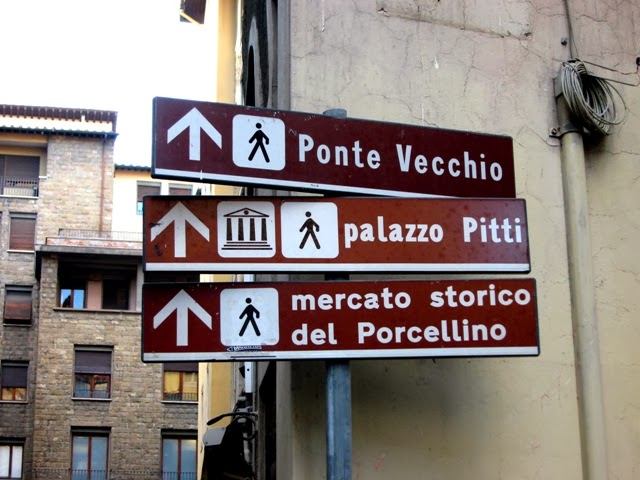

 Commissioned by the Medici, it allowed them to move from the Palazzo Vecchio to Palazzo Pitti without having to go through the streets of Florence in total safety.


On Ponte Vecchio in 1901 a bust of Benvenuto Cellini, a famous glodsmith  of the sixteenth century, was inaugurated on the occasion of the fourth centenary of his birth.


During the Second World War, German troops destroyed all the bridges of Florence, except this one. However they blocked the access to the bridge destroying the two medieval buildings on either side. 


 Visitors who come in Florence can't miss an evening stroll on the Ponte Vecchio. At night, in fact, when the wooden doors of the shops are closedand they look just like coffers, the atmosphere on the bridge becomes even more charming and romantic and it really can't be missed!
 

Leisure with me, this is my tourism!
 

martedì 25 febbraio 2014

Lands of Tuscany: Casole d'Elsa

 Hello my friends! Welcome again in My Own Italy to discover Italy with my personal Touch!

Today I'd like to talk you about the always charming Tuscany and about the discover of a nice small village: Casole d'Elsa.
If you are staying at the Hotel Terre di Casole you can reach the village on foot, enjoying a nice walk and a magnificent view!


Casole d'Elsa is a small town in the province of Siena: the village has been disputed since the beginning of 1200 the first between Volterra and Siena, then inevitably involved in the war between the Guelphs and Ghibellines. After a year of Florentine rule, Casole was finally admitted to the domains of Siena after the battle of Montaperti.


The current conformation of this medieval village finds his soul of disputed land, with emphasis on the walls and the Fortress of Casole (Rocca Senese), today the town hall. 


 The city walls of Casole have a shape that reminds a pear, with an extension of the major axis of about 420 meters and a width of about 130. You could came in and went out through two gates that now no longer exist.

Casole still retains the atmosphere of the last outpost and traces of fortifications and palaces emerge everywhere, gradually adapted to the needs of men.
The set of streets, squares in medieval buildings make of Casole one of the most charming villages and best preserved - thanks to recent restoration - of the Val d'Elsa.


Casole is also famous for its Palio: a horse race, ridden by jockeys, which takes place every year on the second Sunday of July at 18.30 in honor of San Isidoro. Its origins are lost in antiquity.


There are six districts participating: they correspond to specific territorial divisions, and each district has its own colors and a badge that identifies it. It 'regulated by a statute, led by a Captain and represented by a President. 


 Leisure me: this is my tourism

mercoledì 19 febbraio 2014

Florence and the mysterious Basilica of San Miniato al Monte

Hello, my friends! Welcome to My Own Italy to discover Italy with my personal touch!

Today we continue our travel to Tuscany and I'd like to introduce you to a magic and mysterious place: the Basilica of San Miniato al Monte in Florence.


 The Basilica of San Miniato al Monte stands on a hill to the south-east of the center of Florence, near Piazzale Michelangelo, and is considered one of the finest examples of Florentine Romanesque style.
   

The church is dedicated to Miniato, a Christian of Armenian origin, who was beheaded outside the walls of Florence (in the Porta alla Croce, Piazza Beccaria) for professing his faith.


The legend tells that San Miniato picked up his head and crossed the river Arno and then went up the hill where he was buried and where it is the church dedicated to him.


 The Basilica of San Miniato is full of symbolism: the whole structure seems to have been built on the number 5, which is closely related to the golden ratio, through the pentagon and dodecahedron that comes from this. In the symbolism of the numbers, 5 is the number of the sun but also the quintessential symbol of the spiritual and rooted in the human spirit.

 Inside the Church you may find symbolic animals, some stylized like the pelican: its place is among the various geometric shapes that make up the sacred space in front of the Presbytery, but in an elevated position almost to the roof. The Pelican lends itself to a double symbolic significance, both as an image of Christ, and as the image of God who sacrifices his son by raising him from the dead


The facade of the church is covered in two-tone green and white marble, in the typical Florentine Romanesque style of the eleventh-thirteenth century. On facade stands out of the thirteenth century mosaic depicting Christ enthroned between the Virgin and San Miniato, while on the top of the front is placed a bronze eagle that represents the guild of merchants of the Art of Wool (Art Calimala) that from the thirteenth century had the patronage of the church. 


Outside the Church there is the Bishop's Palace, the former summer residence of the bishops of Florence, who became convent, a hospital and a Jesuit house.


Climb up the stairs of the building and you will be delighted at the sight of one of the world's most famous Italian cities: Florence, here presented in all its beauty!

Leisure with me, this is my tourism!
 

giovedì 16 gennaio 2014

Tuscany: beautiful Viareggio, between papier-maché masks and art nouveau


Hello, my friends! Welcome to My Own Italy to discover Italy with my personal touch!
Today our Travel to Italy is in Tuscany to visit one of the most famous and popular cities of our country: Viareggio!

Located on the Tyrrhenian coast, between the shimmering sea on one side and the white peaks of the snow and the marble of the Apuan Alps on the other hand, Viareggio is known as "The Pearl of the Versilia".


Viareggio probably gets its name to the presence of a castle, called "Castrum de via regia" (Castle of the King Road), erected in honor of Frederick Barbarossa in 1172 AD from the cities of Lucca and Genoa, both enemies of Pisa, to defend the coast.


 The oldest fortification of the city is the Torre Matilde, which dates back to 1500, built by the Lucchesi to defend against pirates.
All around is the oldest neighborhood right along the Burlamacca canal, that is the ideal sport for fishermen and for also the people of Viareggio who moor their small boats.


 At the beginning of the nineteenth century Viareggio starts to turn into tourist destination, thanks to the holiday of Paolina Borghese, sister of Napoleon Bonaparte: Viareggio becomes a popular seaside resort.
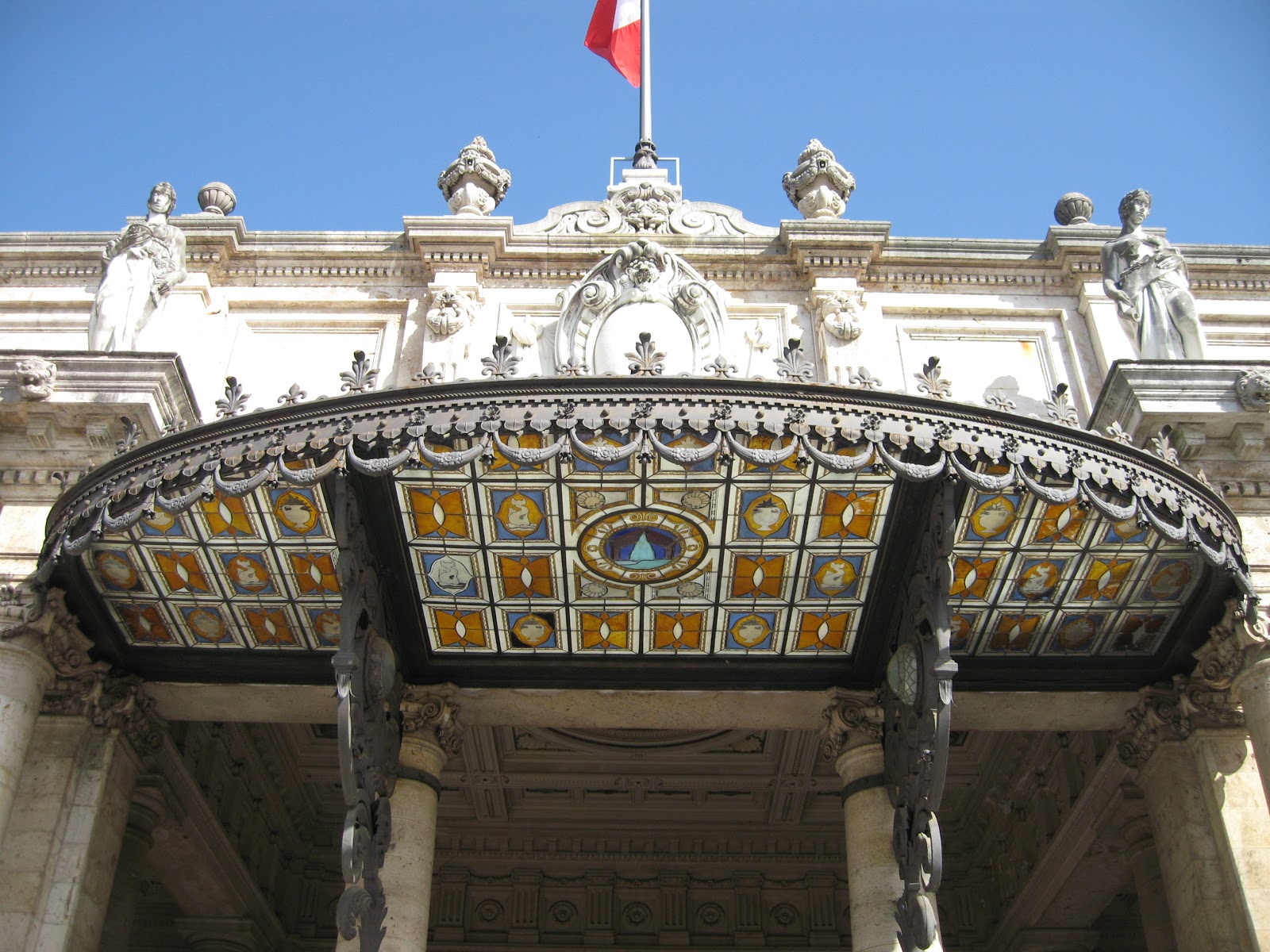
The tourist vocation of Viareggio always combines art, and in fact you can visit the Museums of Villa Paolina, with the wonderful examples of Art-Deco and Art Nouveau that adorn the city.


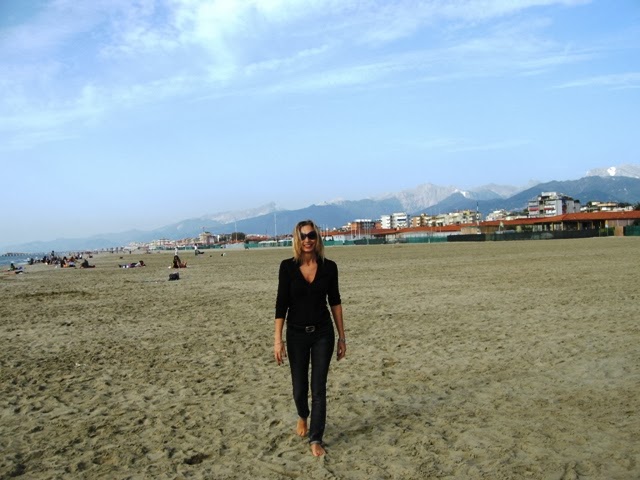
The walk along the seafront is a showcase of Viareggio: a great avenue of more than 3 kilometers along the beach, decorated with Art Nouveau architecture: from Bagno Balena to the Caffe Margherita, where Giacomo Puccini loved to sit.


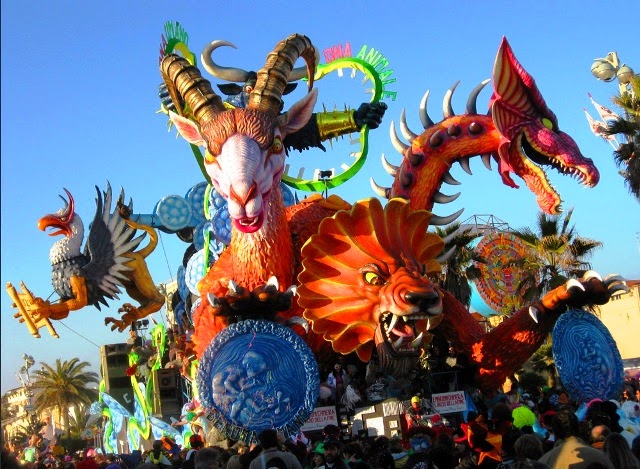
But Viareggio above all means Carnival: four weeks of madness while throngs of tourists come to admire the parade of the most famous papier-mache in the world.
 An ancient tradition: in fact, in 1873 a group of young middle-class, sitting at the Cafe Casino, had the idea of a procession of floats and masks along the avenue that runs along the sea and then the wagons parade on the Promenade: huge caricatures of cards that ironically make fun of the world of politics and the show business.


An unmissable event, which every year, with irreverent satire, tackles the big issues of current affairs and of politics with great sense of humor
After the parade the fun continues in the districts in Viareggio: parties involving alternately the four districts of the city, during which the closed roads are filled with costumes, music and dancing.


Viareggio therefore offers amazing vacation full of fun and relaxation.
Long sandy beaches, vast pine forests, sea and culture.
A place suitable for every season, which meets all the needs of the traveler.


Carlotta Tenneriello
I'd like to suggest you where to stay: choose among many proposals offered by HRS.
I personally had a great time: facilities located in picturesque areas really and equipped with every comfort. I'm sure you will experience a truly enjoyable and unforgettable holiday!

Leisure with me: this is my tourism!


martedì 23 ottobre 2012

Tuscany: Montecatini Terme, Elegance and Style

Thermal "Tettuccio" @ Montecatini Terme (Pistoia, Tuscany)
Welcome, my friends!
I'm so proud to have you here, in My Own Italy and to introduce you to the most famous Spa in Italy: Montecatini Terme!

Thermal "Regina" @  Montecatini Terme
Montecatini Terme is a town in Tuscany in the province of Pistoia, in the Valdinievole; it is a so famous and popular spa thanks to its water-chloride-sodium phosphate, recommended for the treatment of gastro-intestinal diseases.

Moreover, it is located in a strategic position for those who want to visit Tuscany: in fact, you are half an hour from Florence, Lucca and Siena too!


Thermal "Tettuccio"

Already in Roman times the therapeutic qualities of the waters of Montecatini were known: the "garden city" that enchants the visitor with its beauty made ​​of picturesque boulevards, an oasis of greenery and flowers, artistic beauty, serene stillness and warm hospitality.

Leopoldina Water: purifying!


The waters of the thermal baths originate from one basin hydro-mineral that is found at a depth of 60-80 meters, the water is bacteriologically pure: carefully studies from a physical-chemical and clinical pharmacology confirm that they have extraordinary health benefits and on the body!
Thermal "Tettuccio"

Thermal Tettuccio  is considered the symbol of the city and its glorious past. 

Thermal "Tettuccio", entrance
It is the oldest plant of the Baths, and is a real distillation of elegance, and it is known as "the temple of European Spas".

The Park in Montecatini Terme nearby the Spa


The grandeur of the building and the richness of the decorations that characterize the interior are the highest expression of spa town of Montecatini.

I suggest  you also a relaxing walk in the park, which covers an area of ​​420 thousand square meters!

I had a great time there ... try this out and let me know your opinion!

Carlotta @ Thermal "Tettuccio", Montecatini Terme
Follow me: www.myownitaly.com
Ciao, Carlotta!

mercoledì 10 ottobre 2012

Tuscany: Montecarlo, and its Fortress of Cerruglio


The Fortress of Montecarlo (Lucca, Tuscany)
Hello my friends!
Happy to find you again here in My Own Italy  to Discover Italy with My Personal Touch!
Today I suggest you a gem in Tuscany, in the middle of the way of Wine and Olive Oil: I'd like to introduce you to Montecarlo.

Montecarlo (Lucca, Tuscany)

Montecarlo is a small village located at 162 m above sea level, on a hill overlooking the surrounding plains, between Lucca and the Valdinievole.


Montecarlo was founded in 1333 by the future Emperor Charles IV of Bohemia, to which it owes its name (in latin: Mons Caroli).

Due to its extraordinary strategic importance, since its foundation, Monte Carlo was the scene of battles between Pisa, Florence and Lucca, for the domain of Valdinievole and Lucca.

Lucca authorities decided to move the town at the top of the hill on which stood the Fortress of Cerruglio.


Fortress of Montecarlo (Lucca, Italy)
The fort played a strategic role in the wars of the fourteenth century: the fortress was enlarged by Lucca themselves first and then by the Florentines, especially Grand-ducal government which, since 1437, had finally Montecarlo under its control!

Fortress of Montecarlo (Lucca, Italy)

In 1775 the fortress was broken up by the Grand Duke Pietro Leopoldo and sold at auction


Since then  it became a private property; the fortified complex is covered by the owners of ongoing works of conservation and restoration.


The Garden inside the Montecarlo Fortress (LU)
The fortress is open to the public during the summer months, its renovated rooms and courtyards host exhibitions and cultural events.


If you would like to know something more, why don't you follow me on this interview?
Enjoy!


If you want to take your rest in this magic place, I suggest you to stay at Casa Fontanino : you'll find more information on my page Where To Sleep!

Ciao,
Carlotta!

mercoledì 19 settembre 2012

Montalcino: The Fortress and The Famous Brunello Wine

The Fortress of Montalcino (Siena, Italy)
Hello, my friends!
Welcome in My Own Italy, happy to let you discover Italy with My Personal Touch!
Today I'd like to tell you something about one of the most famous land of wine: Brunello di Montalcino .

Montalcino (Siena), The Fortress
Montalcino is located on a hill about 600 meters to the right of the Orcia river, about 40 km south-west of Siena, in Tuscany.
Origin of the first Etruscan and then Roman.
 
Its strategic location on the ancient Via Francigena was such that Montalcino rapidly acquired the structure of the military city with great defensive walls, numerous towers and the beautiful fortress that, despite the many sieges, was never conquered.
 
 
 Became a free city under the Guelphs, Montalcino fought almost all the wars of the Middle Ages is and Ghibelline factions and against both the nearby Siena until 1361 when it was granted to Montalcinesi Siena citizens.

The Fortezza was built in 1381 by Domenico di Feo and Mino Foresi and incorporates part of the walls and towers of the previous century.

 
Montalcino, The Fortress

The plant is irregular pentagon with slender corner towers. Inside, the spacious courtyard is now used as a theater for shows and cultural events.

Montalcino and Its Brunello Wine


Montalcino is known even (and mostly!) for the production of the Brunello Wine:  Brunello, a diminutive of "Bruno", a male given name which means brown, is the name that was given locally to what was believed to be an individual grape variety grown in Montalcino.

Wine Testing in Montalcino (Siena, Italy)


Brunello di Montalcino is made 100% from Sangiovese.


The Sangiovese grape is the most widely planted grape in the Montalcino region and is the only permitted grape in the Brunello di Montalcino DOCG. 

Wine Shopping in Montalcino (Siena, Tuscany)


The particular clones of Sangiovese are unique to the Montalcino region and have developed in adaption to that area's specific terroir


Geraniums in The Fortress


The altitude and climate of the Montalcino region has provided an area where Sangiovese ripens more fully and consistently than anywhere else in Tuscany!

I hope you will enjoy this so famous italian wine... 
I'll wait for your suggestions and comments!

Follow me: www.myownitaly.com 
Ciao, Carlotta