Hello, my friends! Welcome to My Own Italy to discover Italywith my personal touch! Our travel today is toLombardyand we are going to the historical centerof Milanto visitan ancient house: the Barons Bagatti Valsecchi Museum.
The Bagatti Valsecchi Museumis situated in the historical centerof the city: the most famous center, I mean the one ofMontenapoleoneandof the mostcool and trendy streets. The so-called “noble” floor of the Bagatti Valsecchi mansion, restructured in the 1880s in the Neo-Renaissance style, houses the splendid home of the brothers Fausto and Giuseppe Bagatti Valsecchi.
The Lombard Renaissance art and decorative arts collections of the barons Bagatti Valsecchi are displayed in their home as they wished them to be.
In this way, the rich collection of paintings and 15th-16th century objects was melded with the rooms destined to contain it in order to form a fascinating unified ambiance .
Paintings by Old Masters, such as Giovanni Bellini or Giampietrino, majolica, Renaissance glass, 15th century furnishings, ivory, objects in precious metals, arms and armor compose the exceptionally rich patrimony of the house museum.
Everything has been haused to embellish the striking rooms created under the careful supervision of the two Bagatti Valsecchi brothers.
The visit to this beautiful House, that you can't miss while visiting the cities of art in Italy,
is even more exciting if you can count on a very special guide; I was
so lucky as I had the good fortune to be accompanied by Stella: she is
so prepared and so kind, really a nice lady of the house!
Hello, my friends! Welcome to My Own Italy to discover Italy with my personal touch!
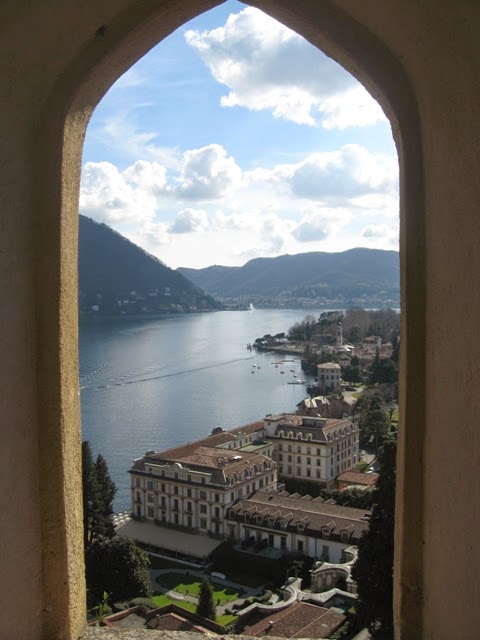
Today travel is to Lombardy and I suggest a hike truly suggestive and beautiful: let's go to Lake Como and relax in the enchanting garden of Villa d'Este!
The Lake Como is the third largest basin in northern Italy; it has three branches with a curious shape of inverted epsilon.
Ideally located in the center of the Alps, it is really appreciated by visitors from the North who see in it a glimpse of the Mediterranean among the mountains.
A really surprising and fascinating landscape of innumerable shades: hues of blue and green waters, rocky peaks covered with snow or with forests, villages built of stone castled between lake and mountains, cities rich in history and culture.
If you like to enjoy an exciting and very charming walk, I suggest you visit the gardens of Villa d'Este: think that in the park surrounding the Villa there is one of the longest-running plane trees of Lombardy, 500+ years old!
The countless varieties of plants make it a real botanical garden: chestnut, magnolia, wisteria, laurels, agaves, palms, cypresses, pines, oaks and many other trees which are flanked by jasmine, azaleas, camellias, hydrangeas, oleanders, rhododendrons and also daffodils, pansies, geraniums. In short, a riot of colors and scents for a really surprising landscape and harmonious!
If you wish to enjoy a drink in total relax, I suggest you sit in the gazebo and contemplate the calm waters of the lake: a truly unique experience!
My personal experience was a day of poetry: the one of a place a bit magic in which sometimes you have to dip, a must-see destination during your holiday in the italian lakes.
Hello, my friends! Welcome to My Own Italy to discover Italy with my personal touch!
Today travel is to Lombardy and I'd like to introduce you one of themostunique focusonItaliansparklingwine:Franciacorta. So, I guessthenyou will becuriousto discoverthe most famous wineryin the world for the production ofsparkling wine: Berlucchi!
The territory ofFranciacortais mostlyhilly anddotted withancientwoodland; it has beenrecentlytransformedby the planting ofnumerous vineyardsthat characterize its peculiarity: a must-see destination toi discover the italian villages.
Theorigin of the nameFranciacortacomes from"curtes francae", the smallcommunity of Benedictine monkssettledin the Middle Agesin a hilly areanear Lake Iseo.
InFranciacorta therewerevery importantnoble families, such asOldofrediIseo,theSala Gussago,the LantieriParatico,theLanade 'Terzi di Borgonato,theDella Corte di Nigoline, theBargnani di Adro, who hadproperties and power,not onlyin the city ofBrescia,buteven in this area, where they builttheir largecountryhouses.
Even from a long history,the new course ofthe Franciacortawinemakingbeginsin effectat the beginningof the sixtieswith the birthof the firstwineries.In the lateseventies theItalian wineexperienced aperiod of greatturmoil andmany entrepreneursinvestedinFranciacortaand pointedon the cultivationof the vine. From there,the growthwas rapidup totoday'sFranciacorta, considered by manythe only areaofItaliansparkling wine productionwhich has reached levelscomparableto those of theFrench Champagne.
TheFranciacortawas the firstItalian wine,made exclusivelyby the method ofsecond fermentation in thebottle (Classic Method),to have been awardedin 1995the Denominationof Origin Controlled andGuaranteed.Todayon the labelreadsonlythe nameFranciacorta, the onlyterm that definesthe territory, the methodof production and thewine.In Europe, only10 denominations have thisprivilege, and among theseonly threeare producedbyfermentation in the bottle: Cava, ChampagneandFranciacorta.
The Consortiumjoinsthe Franciacorta Wine Route,which enhances thecultural and culinaryheritageof an areamore and more appreciatedas a tourist destinationin every season.
The Franciacorta Wine Routeoffers the possibility topersonalize your itineraries,dedicating to thevisit of the cellars, discovering the areawith itsmedieval villages andold houses,abbeysandmonasteries,and alsotheLake Iseo: perfect destination for your italian holiday! I invite you tofollow meto enjoyone of most famous and appreciatedwineriesin the world: Berlucchi! Leisure with me, this is my tourism!
Hello, my friends! Welcome again to My Own Italy to discover Italy with my personal Touch!
Ou travel today is to Lombardyand I'd like to suggest you a pleasant trip fromMilanto a destinationin the Alpine foothillsof the richand aristocraticBrianza: Montevecchia!
Montevecchiais a small town situated in the northof Milan;due to thegeographical location(locatedon ahill about500 metersabove sea level) has avery particular climatemoremild in winter andlesshot in the summer...a real treat!
Montevecchiahas prehistoric origins: in the surrounding park, at the endof the seventies, were foundtwo campsdating back toNeanderthalandhumansapiens, datedrespectively the firstand the secondin60,000 yearsto 32,000.These settlementsare among theoldestin Lombardy!
The word "Montevecchia" is believed to bedue to aRoman fortresswhich was locatedin place of the actual sanctuary, surroundedby a circle ofprotectivewallsof more than 800meters long.The original name wasMonsVigiliae(Watchtower). In the highest pointof the hill ofMontevecchia there is the Sanctuary of Beata Vergine del Carmeloof medieval origins. They think that this church was one of the first built by the Lombards. The lombard churchon the top of Montevecchiaresisteduntil1570, when a firedue to"the neglectof the priest"(readby the actsof the visitof St. CharlesBorromeo)completely destroyedboth thevestmentsand the church vestments. In 1924 thecurrent sanctuary wasdedicated to Our Ladyof Mount Carmel.
In Montevecchia you can also admire VillaAlbertoni-Agnesi, home of theworld-famousmathematical Gaetana Agnesi. It was built in '700.The main entranceand the wrought iron balconyabove,the staircase,the balustradecarved in garlandsintertwined with "putti",area clear referenceto Rococo style. The beautiful Italian garden was perfectly preserved.
Cyclists areenthusiastic visitorsof the slope leadingtoMontevecchia.Onceyou reach the topyou can enjoyatruly breathtaking landscape!!
Of course,there is nothing betterthan a mealoutdoors enjoyingthis magnificent view: I suggest youto have a break at Tavern Galeazzino,and taste atypical menuof this place: cold cuts, cheese and good wine!
Hello, my friends!Welcome inMy Own Italy!
Today I suggest you a different itinery in Milan, away from themost famous tourist destinations; you know that I love to let you discover Italy with My Personal Touch!
In the very center of the city, Piazza Scala, you can visit a new museum: Gallerie d'Italia .
Symbols of the history of Milan, the buildings that together form the
architectural complex that houses the Galleries were designed by leading
Italian architects between the end of the eighteenth and the beginning
of the twentieth century.
The Galleries, Milan (Italy)
The exhibition Twentieth Century Worksite presents Italian art of the
second half of the 20th century, in a selection of approximately 200 art
works from the Intesa Sanpaolo collections.
Organised into 12 sections, they are enriched by the inclusion of
sculptures, by a themed study dedicated to Colour as a plastic form.
If you want, you can enjoy a short presentation of the Galleries in this video:
This is me inside the Galleries
The art works of the twentieth century are organized in 12 sections and 2
single-subject itineraries. The leading artistic movements of the
period – Informal Art , Spatialism, Nuclear Art, Concrete Art Movement , Kinetic and
Programmed Art, Arte Povera, Conceptual Art and Italian Pop Art – are
retraced through the most important artists.
The Galleries (Milan, Piazza Scala)
For me it was a really exiting experience: not only for the incredible richness of the works in the exhibition, but also because you can play withmultimediascreensand customizeyour itinerary and deepen thearguments that you prefer.
The Galleries, Milan (Italy)
I hope that while you are visiting Milan, you can have enough time to visit this art Gallery. Milan in the capitalnot only of fashion, but also of Italian artand design!!
Hello, my friends, welcome in My Own Italy!
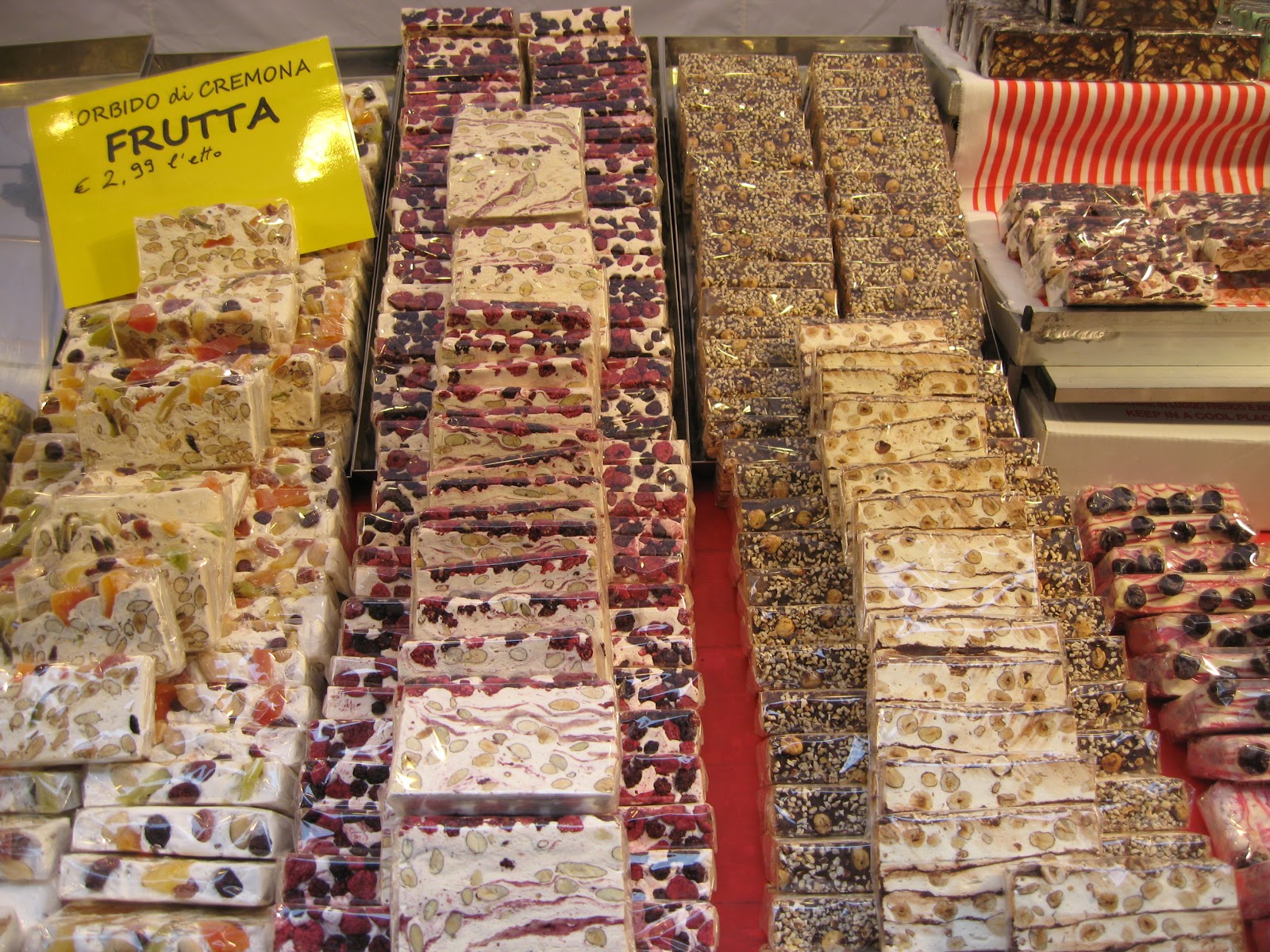
Here in Italy we are in the pre-Christmas period, and in my blog I'd like to introduce you to one of the most famous italian product: the Nougat (in italian: Torrone) and also the citythatisits homeland.
Nougat in Cremona (Italy)
Today I suggest you to visit Cremona, a little hystorical town in Lombardy. It is one hour from Milan, and even it isn't so famous, it can offer you to discover an interestiong architecture of the Middle Ages.
Cremonawas conqueredby the Romansin 218BCwho made it amilitary strongholdand an importantsettlement.
Cremona (Italy)
Focus ofCremonaishistoricPiazza del Comune, whereyou overlookthe main monumentsof the city:TheTorrazzo, the Baptistery, the Loggia of theSoldiersand the Town Hall!
Looking at the Torrazzo (Cremona)
TheIl Torrazzois an imposingtower builtbetween the thirteenth andfourteenth century,itis certainly themost famous monumentof Cremona.
Il Torrazzo is thehighesthistorical bell towerin Italy!
On the fourth floor, you can admire one of thelargestastronomical clocksin the world.
Builtaround theend of the '500the clock representsthe skywith the zodiacal constellationsthrough which themotion of the Sunand the Moon.
The clock in the Tower Torrazzo (Cremona)
By the way, once a year,at this time,in Cremonatakes placethe Festival of Nougat!
Nougat is thetypical cakeofCremona: it's a mixture ofegg white, honey and sugar, stuffed withalmonds, walnuts, peanuts, hazelnuts, often covered with twowafers.
The streetsand squares ofCremona are animated byevents, showsand tastings.
Festival of Nougat (Cremona, Italy)
I invite youto jointourism andgastronomic tradition:taste thenougat also means living the Cremonese tradition.
Nougats (Cremona, Italy)
The theme ofthe2012 wasthe sweetness; more than 60 initiativesbetween games,entertainment moments, cultural events, food and wine designedto celebratethe combination ofnougat-sweetness in a magical atmosphererich in history andtraditions!
Carlotta and Nougat! (Cremona)
In fact, it is said thatthis cakeiscreated to celebratethe marriage ofFrancescoSforzaandBianca MariaViscontiback in1441.
As you can see, I let myselfreallywin! Enjoy, and let me know... :-)
Hello, my friends!
Welcome to My Own Italy, to discover Italy with my Personal Touch!
Today I'll introduce you to one of the most famous and majestic church in Italy: TheCertosa di Pavia.
Certosa di Pavia, the Entrance
The Certosa di Pavia is a monastery and complex situated near Pavia, in northern Italy.
Built in 1396-1495, it was once located on the border of a large hunting park belonging to the Visconti family of Milan.
Certosa is the Italian name for a house of the cloistered monastic order of Cartusians founded by St. Bruno in 1044 at Grande Chartreuse.
Particular of the Church, Certosa di Pavia
Though the Carthusians in their early centuries were known for their
seclusion and asceticism and the plainness of their architecture, the
Certosa is renowned for the exuberance of its architecture, in both the
Gothic and Renaissance styles, and for its collection of artworks which
are particularly representative of the region.
The Church
The church is built on a Latin Cross plan with a nave, two aisles and transept, typical of Ghotic architecture. The chancel terminates with an apse. It is covered by crossed vaults on Gothic arches and is inspired, on a reduced scale, by the Duomo of Milan.
Chiostro Piccolo, Certosa di Pavia
An elegant portal, with sculptures by the Mantegazza brothers and
Giovanni Antonio Amadeo, leads from the church to the Small Cloister (in
Italian: Chiostro Piccolo.)
Chiostro Grande, Monastery Certosa di Pavia
This has a small garden in the center. The most striking feature is the terracotta decoration of the small pilasters.
Similar decorations also characterize the Grand Cloister (Italian: Chiostro Grande),
which measures c.125x100 meters.
The Coloumns, Certosa di Pavia
The elegant cells of the monks open to
the central garden.
The arcades have columns with precious decorations
in terracotta, with tondoes portraying saints, prophets and angels,
alternatively in white and pink Verona marble.
Today themonastery is the home of only seven Cisterian monks . The monksare able to manageto get thefinancing basisinthemonastery and doing theguided toursof the monasteryand the church,either by sellinga widevariety of productsdirectly from them: honey, chocolate, liqueurspreparedinteas!
Listen to Padre Gabriele, here on my short interview!
In theshopof the monkscan also be foundtrinketsto take homeas a souvenir ofthis very special place andpublications relating tothe monastery itself.
Carlotta in The Monastery of Certosa di Pavia
I hope you will enjoy this visit as I did. It was really a so mystic experience and enthusiastic time to spend in a rainy sunday....